

The Baghdad Constant: Reaffirming The Kurdish Presidency
Opinions 09:56 AM - 2026-04-12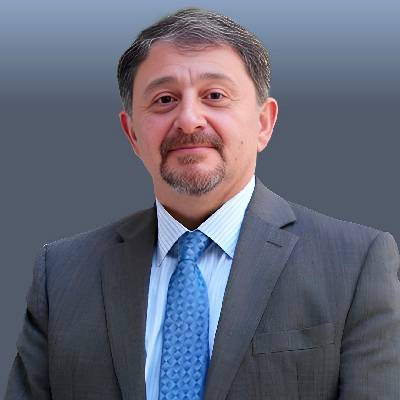
Imad Farhadi
Written by Imad Farhadi, Senior professional in diplomacy, research, and strategic relations and founder of iNNOV8 Research Centre.
The election of the candidate of the Patriotic Union of Kurdistan (PUK) Mr. Nizar Amedi as the president of Iraq is more than a standard political transition; it is a sign that the foundational, mostly unwritten agreements of the post-2003 Iraqi state still hold weight. In a region where political agreements often bounce around like a kite in the wind, the persistent return of the presidency post to a Kurdish representative—and specifically to the PUK—reveals a certain degree of resilience within the country's constitutional and social fabric.
On paper, the Iraqi Constitution is the guide. Article number 67, of 2005, defines the president as the symbol of the nation’s unity and the protector of its sovereignty. Interestingly, while the document provides the framework for the office, it does not explicitly mandate that the president must be a Kurd. That allocation is born out of a "Muhasasa" or sectarian-ethnic quota system, that has become an ironclad tradition. What is perhaps most remarkable is that this entitlement is rarely, if ever, challenged by the Arab majority or other ethnic components within the Iraqi society and the political players. There is a broad, quiet consensus across Baghdad that the presidency belongs to the Kurds—a vital gesture of inclusion for a federal Iraq that ensures stability.
The real drama isn't between Arabs and Kurds; it’s an internal Kurdish tug-of-war. Since 2005, a "gentleman’s agreement" has existed between the two powerhouses of the Kurdistan Region: the PUK and the Kurdistan Democratic Party (KDP). The division of responsibilities was simple: the KDP would helm the presidency of the Kurdistan Region of Iraq (KRI) in Erbil, while the PUK would represent the Kurds in Baghdad as the president of Iraq.
Yet, like clockwork, every four years the KDP tests the limits of its reach. They launch a bid for the Baghdad post, attempting to consolidate power across both capitals. And yet, every four years, they fail to affect change in the well-established political norm. Realising the importance of the balance of power and constitutional representation, a fascinating course correction happens within the halls of the Iraqi Parliament. Despite the KDP’s influence, the system eventually tilts back toward the PUK, honouring the original power-sharing spirit.
This isn't just about political math; there is a deep sentimental value attached to this seat for the PUK. The seat of the president of Iraq, post-2003, was first occupied by the late Jalal Talabani, or "Mam Jalal," a figure whose shadow still looms large over the Green Zone and the Iraqi political scene. Talabani wasn't just a president; he was a master mediator who could speak to all sides of the mosaic of Iraqi people. To many in Baghdad, the presidency “is” the house that Talabani built.
There exists a subtle honour system among the political blocs in Baghdad. Even amidst the cutthroat maneuvering of modern Iraqi politics, there is a collective memory of Talabani’s role as a bridge-builder. Granting the post to the PUK is, in many ways, a nod of respect to Talabani’s legacy. Of course, this election isn’t purely the result of good luck or sympathetic voting to honor traditions; the current PUK leadership has proven to be remarkably adept at political maneuvering in Baghdad, navigating the complex landscape of Shia and Sunni alliances to ensure a winning run for their candidate crosses the finish line.
With the election of Nizar Amedi, we see the culmination of these dynamics. The KDP challenged, the PUK maneuvered, and the honour system held firm. Amedi’s election serves as a reminder that even in a fractured political landscape, some traditions—born of both respect for the past and the necessity of the present—are simply too risky to be uprooted.
More news
-
Jordan Strikes Southern Syria After Linking Church Attackers to ‘Terrorist Groups’
11:30 PM - 2026-10-26 -
Iran, Saudi Arabia, Türkiye and Pakistan Agree to Continue Four-Party Talks
09:06 PM - 2026-10-26 -
North Korea Deploys Artillery Near Border as Tensions with South Korea Rise
07:44 PM - 2026-10-26 -
Egypt Approves Military Support for Saudi Arabia Amid Escalating Houthi Attacks
05:10 PM - 2026-10-26
Most read
-
Oil Prices Fall as Hopes of Middle East De-escalation Ease Supply Concerns
News 10:48 AM - 2026-10-26 -
Egypt Approves Military Support for Saudi Arabia Amid Escalating Houthi Attacks
World 05:10 PM - 2026-10-26 -
Iraq Begins Military Integration of Shingal Protection Units
Iraq 02:45 PM - 2026-10-26 -
PUK Official, British CG Discuss Regional Changes
P.U.K 04:42 PM - 2026-10-26 -
Sulaymaniyah Asayish Seizes 87 Litres of Liquid Methamphetamine
Kurdistan 01:27 PM - 2026-10-26 -
Ilham Ahmed Calls for 20% of Syrian Parliamentary Seats to Be Allocated to Kurds
Kurdistan 05:21 PM - 2026-10-26 -
Jordan Arrests Three Suspects over Deadly Church Attack, State Media Reports
World 02:24 PM - 2026-10-26 -
North Korea Deploys Artillery Near Border as Tensions with South Korea Rise
World 07:44 PM - 2026-10-26
The News in your pocket
Download
 Application