
Between Starmer's Pistol and Iraq's Uncontrolled Weapons
Opinions 10:47 AM - 2026-07-26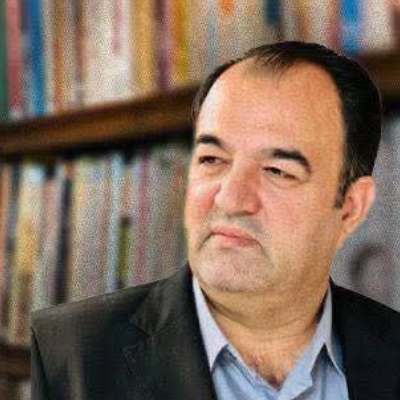
Mohammed Sheikh Othman
Written by Mohammed Sheikh Othman
Not every gift is innocent, and not every weapon is simply an instrument of violence. Sometimes an object becomes a mirror, reflecting the character of a state and revealing whether authority ultimately rests with the law or with force.
At the recent NATO summit, Turkish President Recep Tayyip Erdoğan presented a number of world leaders with specially crafted pistols engraved with their names. At first glance, the gesture appeared to be little more than diplomatic courtesy. Yet it quickly evolved into a story that was less about a ceremonial gift than about the relationship between political power and the rule of law.
In the United Kingdom, Prime Minister Keir Starmer was not at liberty to simply take the pistol aboard his aircraft and return to London. His office afforded him no exemption, nor did his position place him above the law. British law had the final say. Handguns are subject to strict regulations in the UK that make civilian possession virtually impossible. Until the appropriate legal requirements were met, the pistol could not be brought into the country as a functioning firearm. As a result, the pistol remained in Türkiye until it had been deactivated and the necessary legal procedures for its transfer had been completed.
The episode was about far more than a diplomatic gift. It illustrated a fundamental principle of the rule of law: that even the highest office in the land is subject to the same legal standards as everyone else.
The episode may appear insignificant, yet it illustrates a defining principle of the modern state.
A state's strength is measured not by the size of its military, the scale of its economy or the number of its institutions, but by its ability to subject everyone equally to the law. When legislation restricts even a prime minister from accepting or transporting a firearm without following the proper legal process, the issue is no longer the weapon itself. It becomes a demonstration of who truly governs. In a state governed by law, individuals do not stand above the law; rather, the law stands above individuals.
That is where Iraq's challenge begins.
The Iraqi Constitution leaves little room for ambiguity in affirming that the state alone should possess the legitimate monopoly on the use of force. Yet constitutional provisions, however carefully drafted, cannot transform reality if they remain words on paper. More than two decades after political change, Iraq continues to face a profound contradiction. While the Constitution assigns exclusive authority over force to the state, power in practice remains divided among political factions, tribal structures and armed groups, some of which acknowledge state authority only when it aligns with their own interests.
The Kurdistan Region, despite making important progress in building stable institutions, continues to face aspects of the same challenge. Institutional development cannot be regarded as complete while weapons remain outside the exclusive authority of the state's legal and security framework.
The greatest danger posed by uncontrolled weapons is that they alter the very meaning of power. Instead of the state being the sole source of legitimate authority, armed force itself becomes a competing source of legitimacy. The law is reduced to words, while the barrel of a gun acquires political influence.
Perhaps even more damaging than the proliferation of weapons is the culture that normalises them. When firearms become prestigious gifts, symbols of status or objects of public admiration, society gradually begins to associate authority with force rather than with law. At that point, the state begins to lose not only its monopoly over violence but also its monopoly over legitimacy and public trust.
Canada opted to place the gifted pistol under the custody of the Royal Canadian Mounted Police, with the expectation that, once decommissioned, it could be preserved as a ceremonial artefact. Britain, by contrast, maintained that the gift could not enter the country while it remained a functioning firearm. This was not an exercise in bureaucratic rigidity, but an affirmation of a fundamental principle: the legitimacy of a weapon is determined not by the status of its owner, but by the law that governs its possession.
Can Iraq Draw a Lesson from This?
The answer does not lie in rejecting cultural traditions or politicising diplomatic gifts. It lies in restoring the authority of the state itself. A state that allows weapons to become enduring symbols of prestige risks diminishing the prestige of the state in their place.
The path towards a state does not begin with larger arsenals. It begins with a shared understanding that force does not create legitimacy; legitimacy defines the lawful limits within which force may be exercised.
Only when the law becomes the sole recognised authority over the use of force can the state truly claim to have prevailed.
The pistol that was left in Türkiye may, in the end, have conveyed a more powerful message than countless political speeches. It served as a reminder that the greatest weapon possessed by a modern state is not the gun, but the law.
More news
-
Jordan Strikes Southern Syria After Linking Church Attackers to ‘Terrorist Groups’
11:30 PM - 2026-10-26 -
Iran, Saudi Arabia, Türkiye and Pakistan Agree to Continue Four-Party Talks
09:06 PM - 2026-10-26 -
North Korea Deploys Artillery Near Border as Tensions with South Korea Rise
07:44 PM - 2026-10-26 -
Egypt Approves Military Support for Saudi Arabia Amid Escalating Houthi Attacks
05:10 PM - 2026-10-26
Most read
-
Oil Prices Fall as Hopes of Middle East De-escalation Ease Supply Concerns
News 10:48 AM - 2026-10-26 -
Egypt Approves Military Support for Saudi Arabia Amid Escalating Houthi Attacks
World 05:10 PM - 2026-10-26 -
Iraq Begins Military Integration of Shingal Protection Units
Iraq 02:45 PM - 2026-10-26 -
PUK Official, British CG Discuss Regional Changes
P.U.K 04:42 PM - 2026-10-26 -
Sulaymaniyah Asayish Seizes 87 Litres of Liquid Methamphetamine
Kurdistan 01:27 PM - 2026-10-26 -
Ilham Ahmed Calls for 20% of Syrian Parliamentary Seats to Be Allocated to Kurds
Kurdistan 05:21 PM - 2026-10-26 -
North Korea Deploys Artillery Near Border as Tensions with South Korea Rise
World 07:44 PM - 2026-10-26 -
Jordan Arrests Three Suspects over Deadly Church Attack, State Media Reports
World 02:24 PM - 2026-10-26
The News in your pocket
Download
 Application