

U.S.-Iran Peace Talks End Without Agreement
World 09:24 AM - 2026-04-12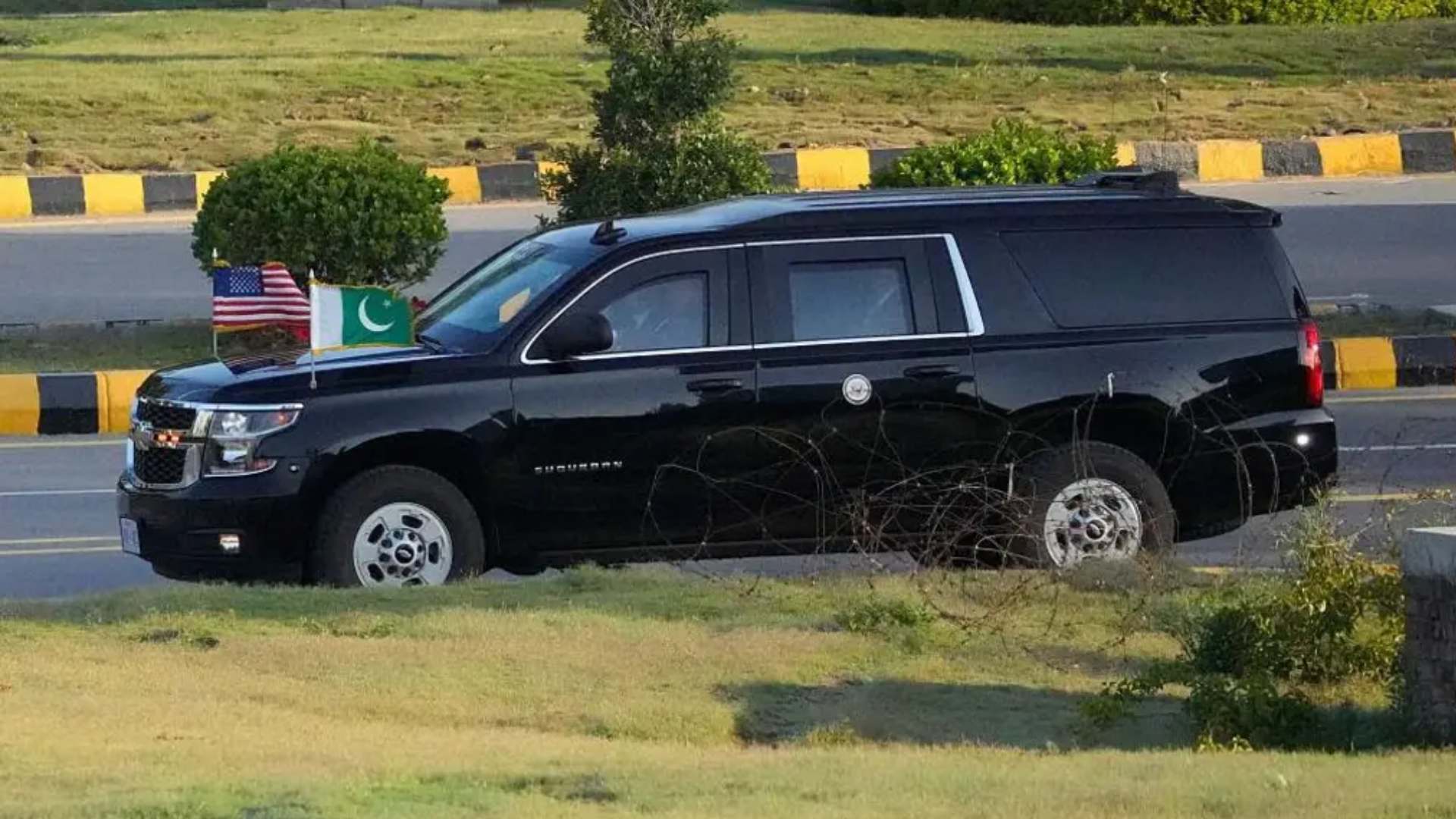 BBC
BBC
Vehicle used to transport the U.S. delegation in Islamabad.
The U.S. and Iran failed to reach an agreement to end their war despite lengthy talks that concluded on Sunday in the Pakistani capital Islamabad, jeopardising a fragile ceasefire.
"The bad news is that we have not reached an agreement, and I think that's bad news for Iran much more than it's bad news for the United States of America," Vice President JD Vance, the head of the U.S. delegation, told reporters shortly before he left Islamabad. "So we go back to the United States having not come to an agreement. We've made very clear what our red lines are."
Vice President Vance said Iran had chosen not to accept American terms, including not to build nuclear weapons.
"We need to see an affirmative commitment that they will not seek a nuclear weapon, and they will not seek the tools that would enable them to quickly achieve a nuclear weapon," he said. "That is the core goal of the president of the United States, and that's what we've tried to achieve through these negotiations."
The talks in Islamabad, after a ceasefire earlier in the week, were the first direct U.S.-Iranian meeting in more than a decade and the highest-level discussions since the 1979 Islamic Revolution.
Iran's semi-official Tasnim news agency said that "excessive" U.S. demands had hindered reaching an agreement. Other Iranian media said there was agreement on a number of issues but that the Strait of Hormuz and Iran's nuclear programme were the main points of difference.
A spokesperson for Iran's foreign ministry said, according to Reuters, the talks were conducted in an atmosphere of mistrust. "It is natural that we shouldn't have expected to reach agreement in just one session," the spokesperson was quoted as saying by Iranian media.
"It is imperative that the parties continue to uphold their commitment to ceasefire," Pakistan's Foreign Minister Ishaq Dar said in a statement after the talks. The two sides agreed on Tuesday to a two-week ceasefire in an attempt to wind down a war that began on February 28 with air strikes by the U.S. and Israel on Iran.
In his brief press conference, Vice President Vance did not mention reopening the Strait of Hormuz, a choke point for about 20% of global energy supplies that Tehran has blocked since the war began.
Vice President Vance said he had spoken with President Donald Trump as many as a dozen times during the talks. But even as the negotiations continued, President Trump said on Saturday that a deal was not entirely necessary.
"We're negotiating, whether we make a deal or not makes no difference to me, because we've won," he told reporters.
The U.S. delegation included special envoy Steve Witkoff and President Trump's son-in-law Jared Kushner. Iran's team included Parliamentary Speaker Mohammad Baqer Qalibaf and Foreign Minister Abbas Araqchi.
Islamabad, a city of more than 2 million people, was locked down during the talks with thousands of paramilitary personnel and army troops on the streets.
In addition to the release of overseas assets, Tehran is demanding control over the Strait of Hormuz, the payment of war reparations, and a ceasefire across the region — including in Lebanon — according to Iranian state television and officials. Iran has also indicated its intention to impose transit fees on vessels passing through the strait.
Despite ongoing disagreements in Islamabad, shipping data showed that three fully laden supertankers passed through the Strait of Hormuz on Saturday, appearing to be the first vessels to leave the Gulf since the US–Iran ceasefire agreement.
However, hundreds of tankers remain stranded in the Gulf, awaiting safe passage during the two-week ceasefire period.
The U.S. President’s stated objectives have evolved, but at a minimum include ensuring freedom of navigation for global shipping through the strait and curbing Iran’s nuclear enrichment programme to prevent it from developing a nuclear weapon.
Tehran has consistently denied seeking to build an atomic bomb.
Source: Reuters
PUKMEDIA
More news
-
Oil Prices Ease as Hopes for US-Iran Peace Deal Offset Supply Concerns
09:19 AM - 2026-10-27 -
Jordan Strikes Southern Syria After Linking Church Attackers to ‘Terrorist Groups’
11:30 PM - 2026-10-26 -
Iran, Saudi Arabia, Türkiye and Pakistan Agree to Continue Four-Party Talks
09:06 PM - 2026-10-26 -
North Korea Deploys Artillery Near Border as Tensions with South Korea Rise
07:44 PM - 2026-10-26
see more


Iraq Reports Progress in Associated Gas Utilisation at Moscow Energy Summit
07:31 PM - 2026-10-26

Ilham Ahmed Calls for 20% of Syrian Parliamentary Seats to Be Allocated to Kurds
05:21 PM - 2026-10-26
.webp)
Qubad Talabani Seeks to Attract AI Companies to Kurdistan in Dubai Festival
03:11 PM - 2026-10-26

Iraq Begins Military Integration of Shingal Protection Units
02:45 PM - 2026-10-26
Most read
-
Oil Prices Fall as Hopes of Middle East De-escalation Ease Supply Concerns
News 10:48 AM - 2026-10-26 -
Egypt Approves Military Support for Saudi Arabia Amid Escalating Houthi Attacks
World 05:10 PM - 2026-10-26 -
Iraq Begins Military Integration of Shingal Protection Units
Iraq 02:45 PM - 2026-10-26 -
PUK Official, British CG Discuss Regional Changes
P.U.K 04:42 PM - 2026-10-26 -
Sulaymaniyah Asayish Seizes 87 Litres of Liquid Methamphetamine
Kurdistan 01:27 PM - 2026-10-26 -
North Korea Deploys Artillery Near Border as Tensions with South Korea Rise
World 07:44 PM - 2026-10-26 -
Ilham Ahmed Calls for 20% of Syrian Parliamentary Seats to Be Allocated to Kurds
Kurdistan 05:21 PM - 2026-10-26 -
Jordan Arrests Three Suspects over Deadly Church Attack, State Media Reports
World 02:24 PM - 2026-10-26
The News in your pocket
Download
 Application